The Best Solution For Energy Saving And Reducing CO2 Emission

The Best Solution For Energy Saving And Reducing CO2 Emission
 Tel:
+86-532-85717690/85832089
Tel:
+86-532-85717690/85832089
 E-mail: [email protected]


In high-temperature industrial environments such as kilns, furnaces, and reactors, the choice of refractory lining material is critical to ensuring thermal efficiency, structural integrity, and long-term durability. Among the most reliable materials for such applications are mullite fire bricks — engineered refractory bricks that exhibit excellent resistance to heat, corrosion, and mechanical stress.
Understanding the manufacturing process of mullite fire bricks offers valuable insight into how these high-performance components are designed to withstand some of the harshest operational conditions. This article explores the step-by-step production process used in modern manufacturing facilities.
Mullite (3Al₂O₃·2SiO₂) is a rare aluminosilicate mineral that forms under high temperatures. It exhibits a unique combination of properties that make it ideal for refractory applications:
High melting point (~1850°C)
Low thermal conductivity and thermal expansion
Excellent thermal shock resistance
Resistance to chemical attack by slags and molten metals
Because of its stability under high heat and aggressive chemical environments, mullite is commonly used in industries such as:
Steel and iron production
Glass manufacturing
Petrochemical processing
Ceramics and cement production
Mullite can be either naturally occurring or synthesized during the firing process of the bricks, typically from a combination of alumina and silica-based materials.
The first step in the manufacturing process is the careful selection of raw materials. The quality and proportion of these materials directly influence the performance of the final brick. The primary components include:
Alumina (Al₂O₃): Often derived from high-purity bauxite, calcined alumina, or industrial by-products such as aluminum hydroxide. Alumina contributes to the brick’s strength and refractoriness.
Silica (SiO₂): Typically sourced from quartz, kaolin, or other naturally occurring clays. Silica reacts with alumina during firing to form mullite crystals.
Preformed Mullite: In some advanced formulations, pre-reacted mullite aggregates or fused mullite may be added to control properties more precisely.
Additives and Binders: Depending on the desired characteristics, various binders (organic or inorganic), plasticizers, and dispersants may be introduced to aid in shaping and sintering.
Accurate formulation is essential to ensure the stoichiometric ratio for mullite formation (approximately 3 parts alumina to 2 parts silica).
Once the raw materials are selected, they must be prepared to achieve uniformity and consistency.
Crushing and Grinding: Raw materials are crushed to reduce particle size and then ground in ball mills or hammer mills. The aim is to achieve the desired particle size distribution for optimal packing density and sintering behavior.
Blending: The alumina and silica-rich powders are thoroughly blended in mixers. Homogenization ensures that the mullite will form evenly during firing and that no localized weak points develop in the brick.
Moisture Adjustment: In wet processing, water is added to create a plastic mix for shaping. In dry processing, moisture is minimized to allow for high-pressure forming.
Shaping is the process of converting the prepared mix into “green” (unfired) bricks. The most common forming methods include:
Dry Pressing: Widely used in large-scale production, this involves compacting the dry powder mix under high pressure in steel molds. It results in bricks with precise dimensions and high green strength.
Extrusion: Used for producing hollow or special-shaped bricks. The plastic mix is forced through a die and then cut to size.
Casting or Hand Molding: Suitable for small batches or complex geometries, this method involves pouring a slurry into molds.
At this stage, the bricks are still fragile and must be handled carefully to avoid damage.
The green bricks are then dried to remove any residual moisture before firing. Drying typically takes place in controlled chambers or tunnel dryers, where temperature and airflow are regulated.
Drying Temperature: Typically ranges between 80°C and 120°C.
Drying Duration: Depends on brick size and moisture content; often ranges from several hours to over 24 hours.
Proper drying is crucial to prevent cracking, warping, or explosions during firing.
The heart of the mullite brick manufacturing process is high-temperature firing, where the actual mullite crystals form.
Firing Temperature: Generally between 1500°C and 1700°C, depending on the raw material composition.
Furnaces: Firing is conducted in tunnel kilns or shuttle kilns with precise control of temperature curves.
During firing:
Solid-state reactions between alumina and silica generate mullite.
Densification of the brick occurs as particles bond together.
Shrinkage takes place, typically 5–10%, and must be accounted for in mold design.
This stage determines the brick’s final strength, porosity, and thermal resistance.
After firing, bricks are subjected to a range of quality control tests to ensure they meet performance specifications. Typical tests include:
Bulk Density and Porosity: Indicates the insulation value and strength. High-density bricks offer better mechanical properties; low-density bricks are better insulators.
Cold Crushing Strength (CCS): Measures the mechanical strength of the brick under load.
Refractoriness Under Load (RUL): Determines how the brick behaves under both heat and mechanical stress simultaneously.
Thermal Shock Resistance: Assesses the brick’s ability to withstand rapid temperature changes without cracking.
Bricks that pass all inspections proceed to the next stage; those that fail are either recycled or discarded.
Depending on customer specifications, the fired bricks may undergo final processing:
Surface Grinding: For precision installation in kilns or lining systems.
Cutting or Shaping: To meet specific geometries or application needs.
Labeling: For traceability and quality assurance.
Finally, bricks are packed in protective materials to prevent breakage or moisture absorption during shipping and storage.
The manufacturing of mullite fire bricks is a highly controlled process that integrates materials science, thermal engineering, and mechanical precision. From the selection of raw materials to the final packaging, every step plays a role in producing bricks capable of withstanding extreme industrial environments.
As demand grows in sectors like steel, ceramics, petrochemicals, and power generation, manufacturers require reliable refractory solutions that offer durability, thermal efficiency, and cost-effectiveness. Mullite bricks continue to be a top choice thanks to their superior performance characteristics.
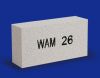
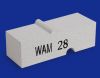
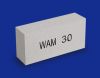
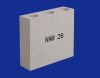
At WAM insulating bricks, we are dedicated to producing high-quality mullite fire bricks using advanced production lines and rigorous quality control systems. Whether you're seeking standard sizes or custom shapes, our expertise ensures that your thermal protection needs are met with precision and reliability.